Property Taxes by State: Lowest to Highest Property Tax Rates in 2025

For US-based homeowners and real estate investors, the old saying, “There are only two things certain in life: death and taxes,” is painfully accurate. Property taxes are no exception.

Buy in the wrong location and they’ll make short work of the American dream.

So, before you sign on the dotted line, let’s uncover which states are the most (and least) tax-friendly for rental property investors like yourself.

What are Property Taxes?

Property taxes are recurring fees that homeowners and real estate investors pay to their local governments. They’re basically a “membership fee” for your community, used to fund essential services like schools, police and fire departments, road maintenance, and other local infrastructure.

Before we move on, a quick note on semantics: The terms “property tax” and “real estate tax” are used interchangeably. However, technically, there is a difference:

  • Property tax is an umbrella term encompassing all taxes levied on property, both real and personal. Real property is immovable (land, buildings), while personal property is movable (cars, furniture).
  • Real estate tax specifically refers to taxes levied on real property, such as houses, apartments, commercial buildings, and land.

For the average homeowner or investor, the terms are essentially synonymous, and we’ll be using them in this way from here on out.

States With Lowest Property Taxes

If low property taxes are a priority for your next rental investment, look no further than these five states:

  1. Hawaii boasts the nation’s lowest rate at a mere 0.27%. Surprised? Hawaii gets a big chunk of its budget from income and sales taxes, relieving the burden on the property tax side of things.
  2. Alabama has the second-lowest at 0.39%. The state’s homes, farmland, and timberland are protected under the state’s constitution, making property taxes hard to raise.
  3. Colorado keeps its 0.49% rates low thanks to the Taxpayer Bill of Rights (TABOR). This law caps how much the government can collect, making it investor-friendly even with the booming real estate market.
  4. Nevada is a new contender in the top five with a tax rate of 0.50%. Nevada’s appealing tax climate now includes one of the lowest property tax rates, adding another reason to consider the Silver State for your real estate ventures.
  5. Louisiana slips down one place with a 0.55% tax rate, but it’s still a low-tax leader. The state offers property tax exemptions, like the homestead exemption, which helps keep the effective tax rate down for many property owners.

To put these numbers in perspective, the national average property tax rate is a hefty 0.99%, nearly FOUR TIMES higher than Hawaii’s rate.

Learn more: 15 best places to buy rental properties.

States With Highest Property Taxes

If dodging high property taxes is your goal, you might want to think twice about these five states. Let’s take a closer look at the tax revenue heavy hitters:

  1. New Jersey holds onto a top spot at 2.23%, though their rate has seen a bit of a dip. The State’s high property taxes continue to be driven by factors like dense population, relatively high real estate values, and those well-funded public services, especially their school system.
  2. Illinois homeowners will also see a decrease in their tax rate, sitting at 2.08%. The reliance on property taxes to fund essential services like education keeps them near the top of the list.
  3. New Hampshire’s rate has also fallen slightly to 1.93%, although property owners still shoulder a heavy tax burden. This is largely due to the state’s lack of income and sales taxes, meaning property taxes are a primary funding source for local services.
  4. Connecticut, known for its affluent areas and strong public services, continues to have one of the highest property tax rates in the nation at 1.79%, although it has decreased from the previous year.
  5. Vermont rounds out the top five with a rate of 1.76%. The state’s commitment to well-funded public services, particularly its focus on equitable education across districts, contributes to its relatively high property tax rate, which has also seen a slight reduction.

Remember, the national average is around 0.99%. That’s less than HALF of what New Jersey residents are paying.

Do All States Have Property Taxes?

The short answer is yes, every state levies some form of property tax. However, savvy investors need to be aware of nuances and exceptions.

Tax rates vary drastically from state to state. As we’ve seen, a property in Hawaii is taxed at a tiny fraction of the rate compared to a property in New Jersey. But even within a high-tax state, certain areas might have lower tax rates on other commodities or specific exemptions that will significantly reduce the burden.

So, a word of warning. Don’t take things at face value. While places like Hawaii and Colorado might sound tempting, states often compensate for low property taxes and missed revenue with higher property and sales taxes. Those costs add up fast, especially for landlords who aren’t just investing in property in a specific state but are living there, too.

That’s why smart investors look beyond the flashy headlines and analyze the total tax burden.

Learn more: Out-of-state real estate investing for newbies.

Property Tax Cuts and Relief Programs

Eligibility criteria for tax reliefs vary by state. Certain states also offer tax breaks for properties used for specific purposes, like agriculture or conservation.

While we won’t break down every single program here, as there are too many to list and they are frequently updated, here are a few examples of the types of relief you might find:

  • Tax credits can be applied directly, often targeting specific situations like installing energy-efficient upgrades or owning historic properties.
  • Tax deferrals allow you to delay paying a portion of your taxes. While not technically a “cut,” it can be a lifesaver if cash flow is tight.
  • Rental property programs are offered by some states or municipalities through specific programs for rental properties. These might include tax credits for providing affordable housing or deductions for certain expenses.

Property Tax Exemptions

And tax exemptions, what about those? Let’s take a look at some of the most common:

  • Homestead exemptions lower the taxable value of a property, which means you’ll pay less in taxes. The specifics vary by state, but typically, it’s a fixed amount or a percentage reduction based on the property’s value.
  • Senior and veteran exemptions offer additional tax breaks for seniors or veterans. These can be quite substantial, so it’s definitely worth looking into if you qualify.
  • Disability and limited income exemptions are also available in some states. Under such exemptions, eligible individuals can qualify for property tax reductions.
  • Agricultural exemptions allow land that is used for commercial purposes to qualify for lower tax rates, as these properties often have different valuations than residential homes.

Applying for tax cuts, relief programs, and exemptions usually involves filing paperwork with your local assessor’s office. The specific process can vary, so check your state’s website for guidance.

Property Taxes Ranked by State

Curious as to what the property taxes are outside the five least expensive and five most expensive that we covered earlier? Done. See all 51 states and districts below:

RankStateMedian Effective Property Tax Rate
1Hawaii0.27
2Alabama0.39
3Colorado0.49
4Nevada0.50
5Louisiana0.55
6South Carolina0.56
7District of Columbia0.57
8Delaware0.57
9West Virginia0.58
10Wyoming0.58
11Arkansas0.61
12Utah0.63
13Mississippi0.65
14New Mexico0.65
15Tennessee0.66
16Idaho0.69
17Arizona0.72
18Missouri0.73
19Montana0.74
20California0.76
21Indiana0.76
22Kentucky0.78
23Florida0.83
24North Carolina0.84
25Virginia0.85
26Maryland0.87
27Oregon0.90
28Washington0.93
29Georgia0.94
30Maine0.94
31Oklahoma0.97
32South Dakota0.99
33Alaska1.02
34North Dakota1.05
35Minnesota1.08
36Pennsylvania1.09
37Texas1.10
38Kansas1.14
39New York1.26
40Michigan1.31
41Nebraska1.36
42Wisconsin1.53
43Ohio1.56
44Iowa1.57
45Massachusetts1.63
46Rhode Island1.63
47Vermont1.76
48Connecticut1.79
49New Hampshire1.93
50Illinois2.08
51New Jersey2.23

Data source: US Census Bureau, B25103 dataset.

Counties With Highest Tax Rates

Some counties really know how to take a big bite out of your budget! If you’re looking for a deal, you might want to steer clear of these notorious high-tax counties:

  • Menominee County, Wisconsin, tops the charts with a whopping 3.64% effective property tax rate. That means for every $100,000 of your home’s value, you’re shelling out over $3,600 in property taxes each year. Ouch!
  • Camden County, New Jersey. Don’t let the Garden State fool you; some areas come with a hefty tax burden. Camden County residents face an effective rate of 3.08%.
  • Salem County, New Jersey, appears again, with Salem County close behind at a 3.03% effective tax rate.
  • Orleans County, New York. Upstate New York also makes an appearance. Orleans County residents pay an effective property tax rate of about 3.00%.
  • Allegany County, New York. Staying in New York, Allegany County shows an effective rate of 2.94%.

And the list goes on! Several other counties in New Jersey and New York also rank among the highest, along with Lake County in Illinois.

Below, you’ll find which ten counties pay the most in property taxes:

RankCountyStateMedian home value (USD)Median Property Taxes Paid (USD)Effective Property Tax Rate
1Menominee CountyWisconsin97,0003,5273.64%
2Camden CountyNew Jersey262,2008,0633.08%
3Salem CountyNew Jersey223,0006,7573.03%
4Orleans CountyNew York126,2003,7813.00%
5Allegany CountyNew York97,9002,8812.94%
6Gloucester CountyNew Jersey283,5007,9642.81%
7Monroe CountyNew York197,1005,4952.79%
8Cattaraugus CountyNew York109,4002,9462.69%
9Lake CountyIllinois326,6008,7432.68%
10Cortland CountyNew York158,1004,1842.65%

Data source: US Census Bureau, B25103 dataset.

Why Do Property Taxes Vary From State to State?

State property tax rates vary depending on several factors:

  • State, county, and city tax authorities decide how much money they need to run things, from schools to garbage collection. Property taxes are a major source of that funding, so if those budgets are high, taxes often are, too.
  • Some states provide more funding for local services than others, which means less reliance on property taxes. Others leave it largely up to local governments, resulting in greater variation across regions.
  • Each state has its own mix of tax sources—income tax, sales tax, and property tax. A state with a high sales tax might rely less on property taxes to fund its budget.
  • A booming economy can mean higher property values, leading to higher assessments and tax bills, even if the rate itself stays the same.

It’s a complex puzzle, but one thing’s for sure: understanding the tax environment of your state—and specific areas within it—is imperative for making smart investment decisions. Don’t just look at the top-line number. Dig into the details to see how taxes impact your bottom line.

How Are Property Values Assessed?

Think property taxes are based on what you paid for your place? Nope—it’s all about assessed value, which is what the government thinks your property is worth right now.

How do they come up with this number? Local assessors are the people behind the curtain. They crunch data annually or every couple of years using a few different methods:

  • Sales evaluation is the most common method. They look at what similar properties in your area have sold for recently.
  • Cost approach involves estimating the cost of replacing your house from scratch, including materials, labor… the works.
  • Income approach is another commonly used method. If your property is a rental, they’ll look at the income it generates to figure out its value.

The assessed value isn’t the final say, though. The government applies a tax rate, which is a percentage that varies by location. This rate is multiplied by the assessed value to calculate your actual property tax bill (you’ll see how this works in the next section).

What are Property Taxes Based On?

Property taxes are based on two factors:

  1. The assessed value: the metric we just discussed, the value given to a property by a government assessor.
  2. The local mill levy: a tax determined by a local government based on the determined funding requirements of various public services and governmental functions within a specific jurisdiction.

It’s important to note that the assessed value is often a percentage of the property’s market value, not the entire value. This percentage, known as the assessment rate, varies by locality. For example, if a home’s market value is $500,000 and the assessment rate is set at 8 percent, the assessed value would be $40,000.

So, how are property taxes calculated? It’s fairly straightforward. Just multiply the assessed value by the mill rate.

For example, if a property’s assessed value is $40,000 and the mill levy is 4.5 percent, you’d

  1. convert the 4.5 percent mill rate into a decimal: 4.5 / 1,000 = 0.0045
  2. and then multiply the assessed value of $40,000 by the mill rate of 0.0045 = $1,800.

If you owned the example property, you’d pay $1,800 annual property tax or $150 per month.

The Impact of Property Taxes on Homeowners

Property taxes aren’t just a line item on your bill. Oh, no. They can significantly impact your finances and your real estate decisions. For homeowners, those annual tax payments add up, especially in areas with high rates, making housing less affordable.

For rental investors, property taxes are a make-or-break deal. If the tax rate is sky-high, your rental income gets eaten up before you even see a profit.

Here are a couple of things to consider for landlords:

  • High property taxes severely limit your cash flow, making it hard to cover unexpected expenses or reinvest in your property.
  • If you have to pass those high taxes onto your renters, it could lead to higher vacancy rates or force you to accept less qualified tenants.

That’s why savvy investors factor in the tax burden when evaluating potential markets. It’s not just about home prices—it’s about the continued cost of ownership.

Learn more: Real estate taxes for landlords with small portfolios.

How to Effectively Manage Your Property Taxes

With a bit of planning and know-how, you can take the sting out of that annual bill and keep more of your hard-earned rental income.

First things first: set aside some cash each month. You’ll thank yourself later when that tax bill arrives. Even a small amount saved regularly can make a big difference.

Next, know your options. Some states let you pay your taxes in installments throughout the year, which can make it more manageable. Check with your local tax office to see what’s available.

Don’t forget about those sweet exemptions and relief programs. As we discussed earlier, there might be ways to lower your property tax bill depending on your situation. It’s worth digging into those options, as they could save you a bundle.

And don’t be afraid to ask for help. A tax professional will guide you through the ins and outs of deductions and credits specific to your state. It might seem like an extra expense, but their expertise could save you way more than it costs (plus, their services are tax-deductible).

Learn more: helpful tax tips for landlords.

Maximize Your Property Value

Understanding the factors that influence tax rates, researching your state’s specifics, and taking advantage of potential exemptions will allow you to take control of your tax burden and protect your investment.

Remember, being a savvy property owner isn’t just about finding the right property; it’s about making smart financial decisions.

Ready to make your property work for you? Explore our range of property management solutions such as Ziprent & TurboTenant Autopilot and take the first step towards a stress-free, profitable future.


12 Real Estate Investment Strategies You Need to Know

Tired of watching your money gather dust in a low-yield savings account?

When a unit is ready to fill, you can post your listing here and syndicate it across the major rental sites.

Itching to build a solid real estate portfolio?

You’re in luck—our guide breaks down 12 proven strategies, from generating passive income to building long-term wealth. Lesssgo!

1. Buy and Hold

Think of buy-and-hold as the tortoise in the real estate investing race. It’s not about quick flips; it’s about building long-term wealth through appreciation and rental income. Start by finding your diamond in the rough—properties with strong potential in up-and-coming neighborhoods or areas with planned development.

The best approach? Crunch the numbers. Factor in mortgage payments, property taxes, maintenance, and—if you decide not to live in the property but rent it out—expected rental income. A healthy cash flow is what you’re aiming for here.

Now comes the “hold” part. Patience is key as you watch property values rise and rental income flows in. Holding builds that all-important equity and generates passive income. Eventually, you can sell for a profit, refinance, or continue enjoying that rental income.

Buy-and-hold offers steady income, appreciation, and tax advantages. But it’s best suited to real estate investors who have bucketloads of patience and a willingness to navigate market changes (if this doesn’t sound like you, strategy number three may be better suited to you).

Learn more: rental property tax guide for new and experienced landlords.

2. Rental Property Investment

Want to generate a steady stream of passive income while building long-term wealth? It’s no big secret, but rental properties are a no-brainer in this department. From cozy single-family homes to sprawling multifamily units, the options are as diverse as your investment goals.

But being a landlord isn’t just about collecting rent checks. Nope, managing a property involves finding and screening tenants, crafting ironclad lease agreements, and navigating rental laws. Sound like a headache? This is where professional property management teams do their thing.

A reliable property manager (hey, hello, that’s us, Ziprent) handles all the nitty-gritty, from tenant screening and rent collection to maintenance and legal compliance.

And as an added bonus, they’ll ensure your property is well-maintained, your tenants are happy campers, and your investment property is generating maximum returns.

Learn more: how to buy your first rental property.

3. Fix and Flip

Love those home renovation shows and have a knack for spotting hidden potential? Fix-and-flip might be your real estate calling. This strategy remodels diamond-in-the-rough properties into market-ready gems.

It starts with finding undervalued properties—think outdated kitchens, neglected landscaping, or those “cosmetic fixer-uppers” that scare away average buyers. Next, put on your budgeting hat and estimate renovation costs. Factor in materials, labor, and unexpected surprises that always seem to pop up (hello, leaky pipes).

Now, it’s time to channel your inner Joanna Gaines. Manage the renovation process like a pro, whether you’re DIY-ing it or hiring a skilled crew. Think upgraded kitchens, spa-like bathrooms, and curb appeal that would make your neighbors jealous.

Finally, it’s showtime! Stage your masterpiece and list it at a price that reflects its newfound glory. A successful house flipping hinges on your ability to buy low, renovate strategically, and sell high.

And, unlike the buy-and-hold strategy, fix-and-flip offers short-term returns and the satisfaction of transforming a neglected property. Just beware. It’s not for the faint of heart. Fix-and-flip requires market knowledge, renovation expertise, and a keen eye for design.

4. House Hacking

Want to live rent-free and generate some extra income? Welcome to house hacking. It puts your primary residence to work.

How? By renting out a spare room, converting your basement into a cozy apartment, or even building a separate dwelling unit on your property. Suddenly, your house isn’t just a home. Oh, no, it’s a smart investment that helps you build wealth while you sleep (literally!).

House hacking offers a blend of financial benefits. Not only can you live rent-free (or significantly reduce your housing costs), but you can also generate a steady income stream to pay down your mortgage faster or reinvest in other ventures.

House hacking isn’t all rental checks and all-in-one mortgage accounts, though. It requires property management tact on your behalf—finding reliable tenants, handling maintenance, and finding a harmonious living environment. Easier said than done.

Get it right, though, and you’ll gain valuable experience, build your financial foundation, and maybe even make some new friends along the way.

Learn more: buying a rental property before a home.

5. Wholesaling

Wholesaling connects motivated sellers with eager buyers—a fast-paced strategy that involves finding distressed or undervalued properties, putting them under contract, and then assigning that contract to another buyer for a profit.

The key is to become a master deal-finder. You’ll need to build a network of potential sellers (think those facing foreclosure or needing a quick sale) and establish relationships with investors hungry for their next project.

Becoming a real estate wholesaler also requires strong market knowledge and negotiation skills. You need to accurately assess a property’s value, identify potential repairs, and negotiate win-win deals for both the seller and the end buyer.

It’s a strategy that offers the potential for quick profits with minimal financial investment. You’re facilitating a transaction and profiting from the spread between your contract price and the purchase price the buyer pays.

So, if you’re a natural networker with a knack for deal-making, wholesaling might be your path to real estate rags to riches.

6. Real Estate Investment Trusts (REITs)

Wishing you owned a slice of a skyscraper or a shopping mall? REITs (Real Estate Investment Trusts) make that dream a reality. REIT companies own and operate income-producing real estate, allowing you to invest in a diversified portfolio of properties without the hassle of being a landlord.

Here’s how it works: instead of saving yet another downpayment, you buy shares in a company that owns and manages properties like office buildings, shopping centers, apartment buildings, and even hotels. They generate income through rent and leases and then distribute a portion of those profits to shareholders as dividends.

REITs, like mutual funds, offer liquidity (meaning you can easily buy and sell shares), diversification (spreading your risk across multiple properties), and the potential for both income and appreciation.

These trusts come in different flavors, from retail and residential to healthcare and industrial. Each type focuses on a specific sector of the real estate market, allowing you to tweak your investments to meet your goals and risk tolerance.

If you’re looking for a hands-off way to invest in real estate, REITs might just be the perfect match.

7. Real Estate Investment Groups (REIGs)

Another hands-off investing opportunity? REIGs (Real Estate Investment Groups). These groups pool resources from multiple investors, allowing you to team up and tackle bigger, bolder projects than you could alone.

How does this look? You join forces with other investors, combining your financial firepower and expertise to acquire properties, share risks, and maximize returns. Suddenly, those large-scale apartment complexes or commercial development investments you couldn’t quite swing before seem within reach.

REIGs also provide access to larger and more diverse investment opportunities, reduce your individual risk, and allow you to learn from experienced investors—a win-win-win.

Learn more: out-of-state real estate investing for beginners.

8. Commercial Real Estate

Ready to play in the big leagues of real estate? Commercial properties offer the potential for high income and long-term appreciation. Yup, we’re talking about those towering office buildings, bustling retail spaces, and massive industrial warehouses.

Heads up, though, commercial requires a different skill set from residential real estate investments. Leasing agreements are more complex, tenant relationships can be more demanding, and market conditions fluctuate significantly. You’ll also have to wrap your head around zoning regulations, property taxes, capital gains, and the unique needs of commercial tenants.

Don’t let the complexities scare you away, though.

With careful planning, market research, and perhaps a bit of expert guidance, commercial real estate can be a lucrative addition to your investment strategy.

9. Real Estate Crowdfunding

Ever wished you could invest in a luxury condo or a sprawling apartment complex, but your bank account laughed in your face? We’ve got just the thing: real estate crowdfunding. This strategy allows everyday investors to pool their resources and own a piece of the action with smaller upfront costs.

Think of it like Kickstarter for real estate assets. Crowdfunding platforms connect investors with developers and projects. That way, you can browse opportunities, choose your favorites, and invest alongside others. Suddenly, those high-rise condos and trendy retail spaces are within reach.

The beauty of crowdfunding lies in its accessibility. Minimum investments are often lower than traditional real estate ventures. A low barrier to entry that allows you to diversify your investment portfolio and access exciting projects that were once reserved for the ultra-wealthy.

But before you jump on the crowdfunding bandwagon, remember the importance of due diligence. Research the platform, scrutinize the project details, and assess the risks involved. Look for experienced developers, solid financials, and projects that align with your investment goals.

Get ready to reap the rewards of investing in partnerships!

10. Land Development

Just for a moment, think beyond bricks and mortar. What’s left? Land, of course. Uh-huh, land development is where the true real estate visionaries play. It’s about converting raw, undeveloped land into thriving communities, bustling commercial centers, or even serene nature escapes.

But land development isn’t for the faint of heart. It’s a complex dance of zoning regulations, environmental assessments, meticulous planning, and intricate construction processes. You’ll need to tackle permits, approvals, and potential roadblocks with the grace of a seasoned developer.

The rewards, however, can be substantial. Successfully developing land can generate significant returns as raw land transforms into valuable real estate. Think residential subdivisions, shopping malls, industrial parks, or even eco-friendly communities.

Land development is a long-term investment that requires vision, patience, and a deep understanding of the market. But for those with an entrepreneurial spirit and a knack for transforming landscapes, it can be a rewarding path to real estate success.

11. Tax Liens and Deeds

Ever dreamt of snapping up a property for pennies on the dollar? Investing in tax liens and deeds might be the answer. You see, when property owners fail to pay their taxes, the government can place a lien on the property and, eventually, auction it off to recoup those unpaid dues.

Here’s where the opportunities come in, you savvy investor. By buying a tax lien, you essentially pay off the delinquent taxes and gain a claim on the property. The homeowner then has a set period to repay you, with interest, to clear the lien. If they fail to do so, you might be able to acquire the property through a tax deed sale.

As you can see, tax liens and deeds offer the potential for high returns, as you can acquire properties for significantly less than their market value. Plus, you can earn interest on your investment while you wait for the homeowner to repay or the property to go to auction.

But beware, tax lien investing comes with its own set of risks. Thorough research is super important. You’ll need to understand the local laws, assess the property’s condition, and evaluate potential legal challenges. It’s definitely not a game for the impulsive or uninformed.

However, if you’re a savvy investor with a high-risk tolerance and a knack for due diligence, tax liens, and deeds can be a lucrative way to expand your real estate portfolio.

12. Buy, Rehab, Rent, Refinance, Repeat (BRRRR)

Money printer go BRRRR… Ya-huh, buying properties below market value, renovating them, renting them out, refinancing to pull out equity, and repeating the process is a serious play. A cyclical approach that starts with finding those undervalued properties hiding in plain sight—the fixer-uppers, distressed sales, or off-market deals with untapped potential.

Once you’ve snagged your bargain, you’re ready to transform the property into a renter’s dream with strategic renovations, boosting its value and appeal with cosmetic upgrades, smart improvements, and a touch of design magic.

Now that your property is sparkling, rent the place out and start generating that sweet, sweet rental income. Once your property is generating a steady income stream, it’s time for the magic of refinancing. This allows you to pull out your initial investment (or even some profit!), freeing up capital to fuel your next BRRRR adventure.

With that newfound cash in hand, you’re ready to dive back into the cycle, acquiring another property and repeating the process. The more you BRRRR, the louder the money printer roars, and the faster your real estate empire expands.

So, if you’re ready to embrace the BRRRR cycle and watch your real estate dreams take flight, get ready to buy, rehab, rent, refinance, and repeat your way to financial freedom.

Learn more: should I buy a rental property?

Maximize Your Returns with Smart Management

We’ve covered a LOT of ground here. From flipping houses to building a real estate empire, the possibilities are endless. But remember, every strategy has its own flavor. Choose wisely, my friend.

Speaking of wise choices… If you really want to find success and ditch the landlord drama, Ziprent’s got your back. Our expert property managers handle the daily grind so you can focus on the big picture: making bank.

Ready to partner up? Head to our property management services page or Autopilot, and let’s turn your real estate goals into reality.

15 Best Places to Buy Rental Properties in 2024

Forget the rollercoaster of recent years. 2024 is shaping up to be the year of opportunities for forward-thinking real estate investors. Harvard’s recently released America’s Renting Housing 2024 suggests a stabilizing market, with rents still at record highs and demand remaining strong. Another bullish signal is the FED hinting at mid-year rate cuts. ‘Bout time, right? It’s a forecast duo that’s brewed up the perfect storm: less competition, high profitability potential, and sustainable growth.

The key to success? Location, location, location. Here are the best places to buy rental properties in 2024.

Best Cities for Buying Investment Properties in 2024

RankCityGDP Growth %Metro Pop Growth %Rental Yield %Vacancy Rate %Median Home Price (USD)Property Taxes by State %Job Growth by State %
1Austin, TX4.32.17.65.0$533,7191.632.1
2Las Vegas, NV1.51.910.87.4$407,9690.503.4
3Orlando, FL2.41.513.07.5$379,9530.822.3
4Charlotte, NC2.52.411.06.9$391,7500.731.5
5Athens, GA3.61.514.07.4$308,1360.831.0
6Houston, TX1.81.48.39.2$264,6261.632.1
7Raleigh, NC3.42.44.713.3$434,4070.731.5
8Tampa, FL1.81.110.19.4$375,2410.822.3
9Birmingham, AL0.30.914.518.8$126,9490.391.7
10San Antonio, TX2.41.54.99.0$253,7621.632.1
11Phoenix, AZ1.41.39.76.6$422,0010.562.1
12Seattle, WA3.50.95.77.7$847,4190.881.3
13Jacksonville, FL2.01.17.28.0$294,4500.822.3
14Atlanta, GA1.41.410.39.2$390,3730.831.0
15Cleveland, OH0.10.410.215.4$100,7341.430.5

*See the rationale behind our rankings in the methodology section below.

1. Austin, Texas

The best place to buy rental property is…drum roll…Austin, Texas. And it’s not much of a headscratcher why. Austin’s got a buzz that won’t quit. Startups, music festivals, students—the whole city feels like it’s running on high-octane coffee. This isn’t the place to retire; it’s the place to make things happen. That relentless energy is fueling crazy-fast growth: new neighborhoods, new companies, and new opportunities for real estate investing.

Economic and Demographic Growth

Big tech companies have turned Austin into “Silicon Hills,” fueling a job market that’s the envy of Texas. But it’s not just tech: Austin has a booming healthcare sector and clean energy industry, and it still makes stuff. Like actual real stuff. Incredible.

Rental Yields

Recently, rents have cooled, with prices down 3% year-over-year. But don’t panic: those high city-center yields (7.6%) suggest long-term potential, especially with Austin’s population still growing fast. Think of this dip as an investment opportunity, not a sign of the market’s tanking.

Quality-of-Life Factors

Austin boasts great schools, top-notch healthcare, and live music on every corner—what’s not to love? Public transit’s even decent, with new express bus lines making living car-free a real possibility.

2. Las Vegas, Nevada

Las Vegas isn’t your typical city. It’s a neon oasis in the desert where opportunity and excess collide. The 24/7 energy and anything-goes attitude draw tourists and businesses alike, fueling a surprisingly robust economy and diverse workforce.

Economic and Demographic Growth

Vegas isn’t just about casinos anymore. Sure, tourism remains the main driver of the economy, but healthcare, tech, and even mining are on the rise. Big construction projects totaling more than $8 billion in 2023, the hosting of major league sports, and the recent completion of the Las Vegas Sphere mean that growth isn’t slowing down anytime soon.

Rental Yields

Traditional rental yields in Vegas are very respectable (10.8% cash-on-cash return). Even better, short-term rentals offer excellent bang for your investment buck, which makes sense, given that it’s a tourist town.

Quality-of-Life Factors

People come to Las Vegas for the live shows and nightlife. But the practical stuff matters, too, and Vegas is improving in this department. Public transit is decent, especially on the Strip. Healthcare and schools are on the up, making the city not just a place to party but to actually build a life.

3. Orlando, Florida

Orlando, Florida, isn’t just about theme parks anymore. It’s long been a dynamic city that boasts a thriving economy fueled by tourism, tech, aerospace, and world-class healthcare. Nothing’s changed. The current mix of industries, plus a rapidly growing population, makes Orlando a prime spot for rental property investment.

Economic and Demographic Growth

Tourism is a cash cow ($87.6 billion in 2022), but it’s not the only game in town. Tech, healthcare, and even aerospace are major players here. This diversity, combined with a steadily growing workforce (population is up 1.5%), makes for a stable market. Big projects like Universal’s Epic Universe mean the boom isn’t ending anytime soon.

Rental Yields

Orlando boasts one of the best bang for your investment buck, averaging 13%. While average rents are down slightly from last year ($1,960 in March 2024), this is likely a correction, not a sign of trouble.

Quality-of-Life Factors

Good schools, a solid healthcare system, and endless entertainment options mean tenants are more likely to renew leases. The strong public transportation network is a bonus, reducing car dependency and making rentals more attractive to younger renters.

4. Charlotte, North Carolina

If you think Charlotte’s just about sweet tea and NASCAR, think again—the city’s economy is pumping along nicely. Fortune 500 headquarters, a thriving tech scene, and strong manufacturing fuel consistent job growth. This, combined with a low cost of living and vibrant culture, drives explosive population growth.

Economic and Demographic Growth

Charlotte’s economy is one of the nation’s fastest-growing (a 2.5% GDP growth rate in 2022). Major investments, like Apple’s $1 billion in the region, signal continued expansion. Large investments, plus a diverse workforce, will make Charlotte an economic powerhouse for years to come.

Rental Yields

Investors know it’s about returns, and Charlotte delivers. Gross rental yields here average a very impressive 11%. Compare that to the 4-5% national average, and you see why this market is hot.

Quality-of-Life Factors

Above-average schools, two major hospital systems, diverse attractions, and a growing arts scene make this city attractive to everyone, from young professionals to families. Happy tenants mean lower vacancy rates for you.

5. Athens, Georgia

Athens is the kind of place people visit for a weekend and end up staying for a lifetime. It’s got that walkable Southern charm, a world-class music scene, and surprisingly good healthcare for a smaller city—the perfect recipe for attracting renters and making your investment thrive.

Economic and Demographic Growth

Sure, the University of Georgia is still a huge economic driver, but so are healthcare, biotech, and manufacturing. This diversity means a healthy job market—the unemployment rate is just 3.2%, lower than the national average. And it’s not just jobs. Athens is growing: its population is up 1.5% year-over-year, and expansions at local biotech firms and new manufacturing facilities mean the city’s well-positioned for the future.

Rental Yields

For investors, those lower purchase prices (median house prices landing just a touch over 300k) translate into solid yields (14%, to be exact), making Athens one of the hottest real estate markets in the country.

Quality-of-Life Factors

Athens offers a unique vibe that keeps renters happy. Stellar healthcare, a killer music scene,  and walkable neighborhoods are a huge draw. Even the public transit is decent for Georgia, with free buses making it easy to ditch the car. And let’s not forget that UGA vibe that gives the whole city a youthful energy.

Learn more: is buying a rental property worth it?

6. Houston, Texas

Houston isn’t a city for the faint of heart. It’s hot, it’s sprawling, and it’s got that Texas-sized ambition. This is a place where people come to make things happen. That relentless energy drives a booming economy and constant growth.

Economic and Demographic Growth

Houston’s no one-trick pony. Sure, it’s the energy capital of the world, but it’s home to NASA’s Johnson Space Center and a manufacturing sector that’s diversifying as we speak. This, plus steady population growth, is fueling job creation.

Rental Yields

Houston’s rental yields are seriously impressive, clocking in at 8.3%. With its strong economy and pro-business climate, Houston offers landlords a chance for healthy returns.

Quality-of-Life Factors

Houston offers a unique quality of life. It’s got well-performing universities, the world’s largest medical complex, and seriously diverse food and arts scenes. And while there’s some urban sprawl, the public transit’s improving, and the city’s investing in making neighborhoods more livable.

7. Raleigh, North Carolina

Raleigh isn’t just about the job market; it’s got a surprisingly great quality of life. Think awesome schools, tons of green space, and a vibrant arts and food scene…with a cost of living that won’t break the bank.

Economic and Demographic Growth

Raleigh is one of the fastest-growing cities in the country, and for good reason. It’s got a tech scene that rivals the West Coast, major healthcare players, and top-notch universities (thanks, Research Triangle). This mix fuels a strong job market—the population and the state’s GDP are both up.

Rental Yields

Raleigh’s rental market is HOT. The area is so competitive, renters are practically fighting over vacant apartments. The Raleigh-Cary metro area is the most competitive in the Southeast which means landlords have their pick of tenants.

Quality-of-Life Factors

Great schools, top-tier healthcare, a cool arts scene… Raleigh has the total package. Greenways and parks make it easy to enjoy the outdoors, and the public transit is decent for a mid-sized city. This quality of life is a major selling point for landlords.

8. Tampa, Florida

Tampa’s more than just beaches and sunshine. It’s one of Florida’s largest cities with a rock-solid economy built on diverse industries to boot. This mix means steady job growth, a reliable renter pool, and less risk of those boom-and-bust cycles some cities experience.

Economic and Demographic Growth

Tampa is not a tourism town (though that helps); it has major players in defense, IT, finance, healthcare, and manufacturing. Case in point: Infrastructure projects (think billions in spending), exciting new urban developments, and expansions to the airport are all examples of the moves Tampa is making economically. And the population is up 1.1% year-over-year, so that’s a bonus.

Rental Yields

Tampa’s rental yield is sitting at a healthy 10.1%, placing it above the national average. Florida as a whole outperforms national averages, and Tampa’s in-demand location makes it a top contender within the state.

Quality of Life Factors

Tampa’s no sleepy beach town. Good schools, the Tampa General Hospital one of the best in the state, and attractions galore are what keep renters happy long-term. Even the public transit is decent (for Florida!), making it easy to get around without a car.

9. Birmingham, Alabama

Birmingham, Alabama, might just be the best-kept secret in the South. It’s got big-city amenities—good schools, the best hospital in the state, even decent public transit—but with a small-town cost of living. This unique combo is a magnet for renters, and with property prices still reasonable, it’s a recipe for serious investor returns.

Economic and Demographic Growth

Birmingham’s economy is surprisingly diverse, with big players in healthcare, manufacturing, and tech. The city has been recognized for its economic growth potential, ranking third among U.S. mid-sized cities in a national survey by Business Facilities.

Rental Yields

Birmingham’s rental yields are also crushing national averages, clocking in at 14.5%. And that’s not just hype—rents are projected to jump another 12% in the next five years.

Quality-of-Life Factors

Strong schools, world-class healthcare (thanks, UAB), and a surprisingly cool arts scene make Birmingham a place where renters stick around. Even the public transit’s decent, with the new Birmingham Xpress bus routes making car-free living a real option.

10. San Antonio, Texas

Forget those Texas stereotypes—San Antonio’s got a soul all its own. It’s the home to a vibrant mix of Mexican and Texan culture. But it’s not just history—over the last few years, the city has built itself a booming healthcare sector, a growing tech scene, and some surprisingly affordable housing.

Economic and Demographic Growth

San Antonio’s economy is poppin’ off. It’s got a major military presence, a huge healthcare sector, and is becoming a tech hub—and it’s still relatively affordable with the average house price sitting around $250k. The GDP is also up, and during the pandemic, San Antonio was the fastest-growing major city in the country.

Rental Yields

San Antonio’s rental market is softening a bit, with rent prices down slightly compared to last year. This could be a good time for investors to jump in, as those lower prices paired with the city’s affordability mean potentially strong yields.

Quality-of-Life Factors

People love San Antonio for its unique vibe—think River Walk, the Alamo, and huge festivals like Fiesta. But it’s not all tourists and tacos. San Antonio has solid healthcare and an improving public transit system.

Learn more: should I buy a rental property?

11. Phoenix, Arizona

Phoenix isn’t your average Sunbelt city. It’s got that Southwestern swagger—a mix of burgeoning tech scene, year-round sunshine, and a unique desert landscape. It’s a combo that draws young professionals, outdoor enthusiasts, and anyone craving something different.

Economic and Demographic Growth

Phoenix has a diverse economy with major players in manufacturing, tech, and healthcare. Huge new developments like the Intel expansion and the electric vehicle battery facilities are bringing thousands of jobs.

Rental Yields

While rental prices have cooled slightly lately, that high occupancy rate (95.2%) suggests strong demand remains. The takeaway for investors: this market’s been hot, and while crazy growth may be slowing, long-term prospects still look good.

Quality-of-Life Factors

The real draw is the weather and outdoor lifestyle—hiking, biking, you name it. And while public transit won’t win any awards, it’s getting better, with the light rail expanding. A level of livability that makes renters stick around.

12. Seattle, Washington

Forget New York. If you want to invest in a major city that’s got better rental yield potential, you can’t go past Seattle. With a constant buzz of innovation and a booming economy, Seattle’s making a name for itself. But it’s not just about the work—vibrant art, food scenes, and stunning natural beauty make it the total package.

Economic and Demographic Growth

Seattle’s a tech powerhouse, home to giants like Amazon and Microsoft. This fuels a strong economy, attracts a young, well-educated workforce, and is behind the city’s recent population boom. That said, it’s not just tech—a major port, healthcare, and aerospace are also economic drivers.

Rental Yields

Seattle’s rental market is competitive, with high demand and rents to match (median rent is $1,950). While rental growth has cooled slightly lately, the long-term outlook remains strong. Seattle’s steady job growth and limited housing supply mean those high rents aren’t going anywhere.

Quality-of-Life Factors

Seattle has a happenin’, artsy vibe, vibrant coffee culture, and a walkable, European-inspired downtown. Plus, with mountains and forests at its doorstep, the outdoorsy lifestyle is real.

13. Jacksonville, Florida

Once a favorite destination for retirees, Jacksonville is now on the move. It’s attracting new businesses and residents at a rapid clip, and the city’s investing heavily in its future, with major downtown revitalization projects in the works. While the rental market has seen some recent cooling, this growth suggests big opportunities for investors.

Economic and Demographic Growth

Jacksonville’s diverse economy has been powering steady growth. It’s a major logistics hub and military town, and it’s attracting everything from manufacturing to healthcare. Major new development projects, particularly downtown, show confidence in future growth—investors and homeowners like to see that.

Rental Yields

Jacksonville’s rental market is a bit of a mixed bag right now. Rents have been softening recently (they’re down 7% over the past year). That said, the overall demand for housing remains strong, which bodes well for the long term.

Quality-of-Life Factors

Jacksonville is not all business—the city has top-notch hospitals (HCA Florida Memorial and Orange Park Hospitals are ranked among America’s 250 best hospitals) and a surprisingly vibrant art scene. Plus, there are beaches and tons of parks for when you need to get outdoors.

14. Atlanta, Georgia

Atlanta is constantly reinventing itself, attracting major corporations and a diverse workforce. Its blend of old-school Southern hospitality and cutting-edge ambition creates a unique vibe that draws in renters of all kinds. With new developments popping up everywhere, Atlanta’s real estate market is just as dynamic as the city itself.

Economic and Demographic Growth

Don’t sleep on Atlanta. It’s got a surprisingly diverse economy, with big players in healthcare, manufacturing, and trade. Plus, steady population growth and an uptick in job opportunities means Atlanta is attracting new businesses and residents at a rapid clip.

Rental Yields

Atlanta’s rental yields are seriously impressive, clocking in at 10.3%. What’s driving this? High demand from renters, thanks to the strong economy and a constant influx of newcomers. While rents have softened slightly recently, the overall market remains healthy, suggesting those strong yields are here to stay.

Quality-of-Life Factors

Atlanta is a city where people want to stick around. It’s got top-notch universities and a killer arts and music scene. Even the public transit’s decent, with MARTA making it easy to get around without a car. This livability isn’t just good for residents, it’s good for landlords too—happy renters are less likely to skip town.

15. Cleveland, Ohio

Cleveland may be the underdog, but it’s got that Midwestern grit. Think of a city that’s built on manufacturing and a great work ethic. It’s now home to major healthcare institutions a growing tech scene, and it hasn’t forgotten its blue-collar roots.

Economic and Demographic Growth

Cleveland’s economy has faced challenges, but the story’s not over. While population has flatlined, the city’s diverse industries are powering modest but steady growth. The city is actively investing in revitalization projects, particularly in key neighborhoods, which could further boost growth down the road.

Rental Yields

Investors, here’s the good news: Cleveland’s rental market is outperforming. Rent growth has soared to just shy of 40% since 2014, and those yields are significantly higher than the national average. Why? It’s all about affordability. Cleveland’s got some of the cheapest real estate in the country, but rents are solid.

Quality-of-Life Factors

Cleveland’s no fancy coastal city, but it’s got what matters: good schools, world-class healthcare (the Cleveland Clinic ranked number two in the world for the sixth consecutive year), and a surprisingly vibrant arts and culture scene.

Learn more: buying a rental property before your first home.

Metrics That Define the Best Rental Investment Location

Choosing the right city is key to a profitable rental property. But how does the smart money know where to buy investment property in 2024? By following the trends, of course. We’ve broken down the metrics we used to help you spot a winning market:

Rental Yield

Rental yield is all about the return on your investment. It’s expressed as a percentage and reflects how much money you make from your property each year relative to its purchase price. Let’s say you buy a $200,000 single-family home with a 10% rental yield. That means you’d bring in $20,000 annually in rent (before expenses). High rental yields mean more cash flow and a better cushion to cover expected and unexpected costs, making it a key factor for profitability.

Job Growth

Cities with booming job markets are magnets for new residents. It translates to a higher demand for housing, which benefits rental property investors in two ways. First, it reduces the risk of your property sitting vacant—you’re more likely to find qualified tenants quickly. Second, a strong job market often leads to rising wages, allowing you to potentially charge higher rents and boost your returns.

GDP Growth

Gross Domestic Product (GDP) measures the economic output of a local area. Strong GDP growth indicates a thriving business environment where people have money to spend, including on rent. Areas with expanding economies tend to see property values appreciate over time, which is great news for investors looking to build wealth through appreciation over both the short and long-term.

Population Growth

A growing population creates a natural demand for housing. An uptick translates to lower vacancy rates (more on that later), and the potential for rent increases as more people compete for a limited number of available rentals. Cities experiencing steady population growth are prime targets for rental property investors.

Vacancy Rates

Vacancy rate is the percentage of rental units sitting empty. High vacancy rates signal a weak rental market. Cities with consistently low vacancy rates are typically landlord-friendly, offering more stability and predictability for your investment.

Median Home Price

Median home price tells you the typical cost homebuyers are shelling out for a property in a specific area. While sky-high prices might suggest great potential returns down the road, they can also make it difficult to enter the market and return lower rental yields, especially during periods of high-interest rates. The best investment locations offer a balance—affordability for buying in today’s housing market and the potential for home values to appreciate over time.

Property Taxes

Property taxes are a major ongoing expense for landlords. High tax rates can significantly eat into your rental income, making even a strong rental market with high yields less attractive. Considering property taxes helps you identify locations where your investment can generate a healthy return after factoring in all the costs.

Learn more: how to buy your first rental property.

Our Methodology for Selecting the Best Real Estate Markets

We’re not just picking cities we like—there’s a method to our madness. Here’s why we ranked our list of top rental markets in the order we did:

Tools and Models

We crunched the numbers to find patterns in the data. This involved:

  • Metrics like median home prices and vacancy rates were normalized so there was comparability across different scales. For other metrics, such as vacancy rates and property taxes, we inverted the values to align them positively with investment potential.
  • We assigned weights to each metric based on its perceived impact on rental investment potential, allowing us to quantify the attractiveness of each market.

Rationale Behind Metric Weighting

Not all stats are created equal. Here’s how we figured out which ones would make the biggest impact on your investment:

  • Rental yield shows the profitability of rental investments. Weight: 20%
  • Job growth signifies economic opportunity and stability. Weight: 20%
  • GDP growth indicates economic health. Weight: 15%
  • Metropolitan area population growth reflects population trends. Weight: 15%
  • Vacancy rate represents the percentage of unoccupied rentals. Weight: 10%
  • Median home price affects investment entry cost. Weight: 10%
  • Property taxes affect ongoing investment costs. Weight: 10%

Data Sources

Our analysis is grounded in data from the following sources:

  • Gross rental yield was taken from Numbeo.
  • Job growth figures were pulled from the US Bureau of Labor Statistics.
  • GDP Growth was extracted from the American Growth Project report by the Kenan Institute.
  • Metro population growth was sourced from MacroTrends.
  • Vacancy rates were compiled from SmartAsset and Realtor.
  • Median home prices were gathered from Zillow.
  • And property taxes by state were obtained from WalletHub.

Learn more: tips to buying rental property out of state.

Your Path to Successful Rental Property Investment in 2024

And once you’ve landed a data-backed investment? Who’s going to handle all the tediousness of running a rental property?

Ziprent’s got your back. Our expert team doesn’t just manage properties; we maximize returns. From finding top-tier tenants to handling any curveball maintenance throws your way, we turn your data-driven decision into a seriously profitable asset.

Ready to see those returns roll in? Jump over to your rental property management services, and let Ziprent maximize your return on investment.

Calculating Property Value With Rental Income

Investing in rental properties and real estate isn’t just a question of whether or not you can turn a profit immediately. It’s also about how much profit you can make in the long term. Just because a region or neighborhood has high rent, doesn’t mean investing in a rental property in that neighborhood is a good idea. 

Also, just because real estate is valuable and you can potentially turn a high profit, doesn’t mean overpaying for the property is a good idea. You don’t want to bid against people with deeper pockets who don’t have to worry about taking a loss or plan to make it their primary home. You also don’t want to bid against yourself. The best way to ensure you’re paying a reasonable price on a rental property is to know how to calculate that value. Here is one way to do it: 

What to know

  • Gross rental income: This is the total amount of rent collected without adjusting for any costs or losses. 
  • Adjusted gross rental income: This is the total amount of income collected from rent minus the losses from times the property sat vacant and waiting for a new tenant. 

How to calculate 

Calculating gross and adjusted rental income isn’t too complex and anyone can do it. Calculating gross income is just adding up all the money you collect from various fees. These fees include rent as well as any other miscellaneous charges like parking and pet rent. This also includes any late fees if you collect any. This does not include any refundable security deposits paid by the tenants. 

Calculating the adjusted gross rental income is a little more complex but still very simple. What you are calculating is an allowance for the expected amount of days the rental unit is left vacant annually. The way to calculate this is to find out how much rent is per day based on the annual total along with any other regular fees like pent rent and parking fees.

Let’s just say rent is $2,000 a month and there are no other fees. That means the total possible amount to be collected would be $24,000 annually. Let’s say there is a 5% expected vacancy rate. This means you can expect the rental unit to be vacant 18 days out of the year. At full vacancy, the property would be earning $65.75 per day. Multiply that by 18 and subtract it from $24,000 and you will arrive at an adjusted gross rental income of $22,817.  

When calculating adjusted gross rental income, 5% is just a good starting point. You’ll want to use real data based on the property history or comparable regional data to get a better picture of what to expect. 

The different methods

  • The Income/cap rate method: This is used to value the property based on the net operating income and the cap rate. To calculate the net operating income, subtract all of the expenses from the adjusted rental income. In order to calculate the cap rate, calculate by dividing the net operating income by the purchase price. When determining if the property is worth investing in you’ll want to use the 50% rule. This means you want the operating costs to be no more than 50% of the adjusted gross rental income.
  • Gross rent multiplier: This is a very simple calculation you can use as a starting point. The basic idea is that the more rent you can collect from a property, the more valuable it is. While this won’t account for the actual costs of operating a rental property or any of the unforeseen risks, it will give you a ballpark figure of how much a property is worth. The way to calculate this is to divide the price of the property by the gross rental income. This will tell you how many years it’ll take to collect income that is the same value as the property. 
  • Sales comparison approach: This is a way of looking at a property and calculating the value based on what similar properties have sold for recently in the same area. This means you are using the characteristics of the property and comparing them to other properties in the area with similar characteristics and what they sold for. This method may not tell you if a property is a wise investment, but it can give you a jumping-off point of what the right price would be. 

Using them all

There’s no one right way to assess the value of a property. At the end of the day, it depends on who you are bidding against and how the local economy does over the long term, but in order to protect yourself from bad investments, it is wise to use every data point available to you.

For investors who want clearer income tracking and vacancy insights, property management company’s like TurboTenant Autopilot can help streamline rental management and support smarter valuation decisions.

Meet Ziprent’s New Credit Builder for Rent Payments

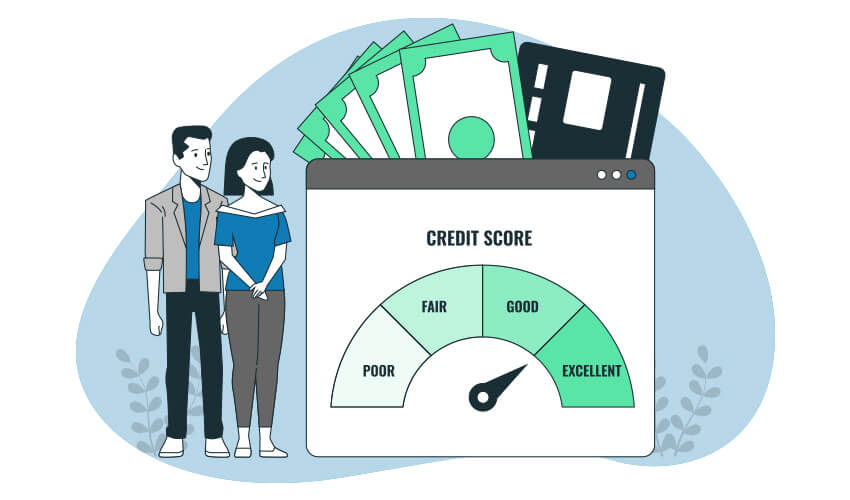
Imagine a world where paying rent on time keeps you in good standing with your landlord and actively improves your credit score.

That’s precisely the experience we’re delivering at Ziprent. We’re introducing a feature, Credit Builder, to report your rent activity to credit bureaus.

By funneling verified, rent payments to credit bureaus, such as TransUnion, we’re creating an opportunity for tenants to improve their credit scores.

How Reporting Positive Rent Payments to Credit Bureaus Helps Improve Credit Scores

At its core, rent payment reporting hinges on a simple premise: credit bureaus place a high value on reliability. If you’re consistently on time with your rent payments, a monthly financial obligation, it’s a strong indicator of financial responsibility.

When credit bureaus incorporate your on-time payments into your credit file, the scoring algorithms see rent payments as much as on-time credit card or loan payments. Consequently, your credit history strengthens, showcasing the real-world stability you’ve been demonstrating all along but never quite got “credit” for.

This reporting can be transformative for tenants with a “thin” credit profile or limited credit history. Many people overlook the value of rent as a tool for establishing a track record of timely, on-time payments. By tapping into this feature, you’re letting your on-time rent payments get put to work in a way that benefits you.

Tenant Credit Reporting Free Through June 2025

We’re rolling out this feature with a no-cost period extending through the month of June 2025. What does that mean for you, the tenant? For the next several months, you can opt-in to have your rental payments reported to TransUnion at zero charge. Consider it our way of saying, “Welcome to a more inclusive credit landscape!”

To get started, simply opt-in (via your Ziprent account), and let the system do the rest. No fine print. There are no hidden fees. Just hassle-free credit reporting through your monthly rent payments. By capitalizing on this opportunity, you’ll see potential improvements in your credit score.

Opt-In After June 2025 for Only $5/mo

After June 2025 comes to a close, tenants may opt-in to continue having monthly rent activity reported to credit bureaus for a small monthly fee of $5/mo.

We’ve structured this cost to remain accessible, ensuring that the credit momentum you’ve built won’t lose steam. Your payments will still be directed to TransUnion, building positive credit history and allowing lenders to see your rent activity.

How Does Ziprent’s Rent Reporting Work?

Ziprent’s rent reporting is designed to be effortless for our tenants. By automating data transfers to credit bureaus and making sure tenants retain full visibility, we’ve created a straightforward experience that puts your monthly payment history front and center. As part of our property management services, we handle everything from rent collection to reporting, giving you peace of mind and helping your credit grow.

Seamless Integration

Ziprent’s platform does the heavy lifting for you. Once you opt in, our system automatically packages your timely rent payment information and sends it to TransUnion. There’s no need to fill out additional forms or submit anything from your end. Our tech is smart enough to gather your rent data and hand it off to the credit bureau on your behalf.

This streamlined integration ensures that your rent payments move from being just another monthly bill.

Visibility in Credit Reporting Apps

After we begin to report your monthly rent payments and activity, you can keep tabs on your credit score using popular credit monitoring services like Credit Karma and traditional credit check services and apps.

With every on-time rent payment you’ll be able to watch your score improve, but also have the motivation to stay on top of future payments.

Benefits of Reporting Rent to Credit Bureaus

Sharing your rent payment history with the credit bureaus can benefit you by improving your credit profile. Here’s how:

Boost Credit Score

One of the biggest draws of rent payment reporting is the potential to improve your credit score, especially if you’re already on top of your monthly rent payments. Credit scoring models place a premium on dependable payment histories, interpreting your monthly rent as a sign of overall financial health.

In other words, every on-time rent payment helps strengthen the narrative that you’re a borrower who takes commitments seriously, giving creditors and lenders more reason to trust you. When it comes to buying a car, securing a mortgage, or even qualifying for better interest rates, those incremental score boosts add up in a major way.

Build Credit Faster

If you’re just starting and have minimal credit history, rent payment reporting can expedite your credit-building journey. Often referred to as “thin file” consumers, these individuals may not have an extensive track record of loans or credit cards. However, that shouldn’t overshadow the fact that they’ve been diligently paying rent each month, sometimes for years.

By reporting your rent payments with the bureaus, to build your credit profile, you quickly accumulate a history of dependable payment behavior. This visibility can shorten the road to stronger credit, allowing you to graduate from limited credit offers to more robust financial options.

Frequently Asked Questions (FAQ)

While rent payment reporting might be unfamiliar to you, most of the concerns surrounding it are straightforward. Below, we’ve addressed some of the most common questions about reporting rent payments to help build your credit.

Ziprent’s reporting reports both your on-time and late rent payments. If your rent isn’t paid on-time, it will be recorded as late and reported to TransUnion.

When do I start seeing changes on my credit report?

In most cases, tenants will see improvements (or at least some movement) in their credit report within one to two reporting cycles. However, credit reports can sometimes take time to process and show changes in your credit profile, so don’t be alarmed if your updates appear slightly sooner or later.

How do I opt in after June 2025?

Opting into our tenant rent reporting is designed to be simple. Once our introductory, no cost period ends, you can continue having your monthly rent reported by opting into and enabling this feature through your Ziprent account.

What if I have questions about my report or scores?

If you’re looking to monitor your progress or have concerns about how your rent payments are being reflected, credit monitoring apps like Credit Karma can help. They offer free snapshots of your credit score, helping you identify any shifts (for better or worse) in your credit.

For other inquiries, you’ll want to consider reaching out directly to TransUnion or any other bureau that compiles your data. They’ll have the details on your file status, updates, and any reporting issues you may see.

Is the $5/month fee per tenant or household?

The $5 monthly charge applies to each tenant. If you’re sharing a lease with a roommate, you would opt-in individually and each pay $5/mo for this feature. Alternatively, you could opt-in and your roommate doesn’t have to.

Next Steps: How to Enroll

At Ziprent, we’ve made opting into our rent reporting as seamless as possible.

Step-by-Step Guide

  1. Log into Your Ziprent account.
  2. Navigate to the “Rents” section to opt-in or opt-out of Credit Builder, rent payment credit reporting for your account.
  3. Receive Confirmation: We’ll quickly notify you that your rent payments will be reported moving forward. After June 2025 you may disable this feature at any time. There’s no obligation to continue having your rent payments reported to credit bureaus.

Paying Rent by Credit Card: Pros and Cons for Tenants

Credit Card Payments for Rent Growth Rate Estimates

  • Steady Year-over-Year Increases
    Various property management software companies and real estate analysts have reported an increase in digital rent payments (including credit card usage) in the range of 10% to 20% year-over-year over the past several years. This figure largely reflects a migration away from paper checks and cash toward online platforms, spurred by convenience and flexible payment schedules.
  • Acceleration During the Pandemic
    Between 2020 and 2021, online rent payments, including credit card transactions, experienced significantly higher adoption rates due to social distancing measures. Some platforms recorded adoption growth as high as 30% during this period.
  • Long-Term Trend
    Current projections suggest that the number of renters paying by credit card or digital methods could rise by 5-10 percentage points within the next two to three years, aligning with the overall consumer shift toward digital financial solutions.

Sources: Federal Reserve Bank of Philadelphia Consumer Finance Institute

Landlords who prefer to collect rent payments online can offer card and ACH options side by side.

Should You Pay Rent with a Credit Card?

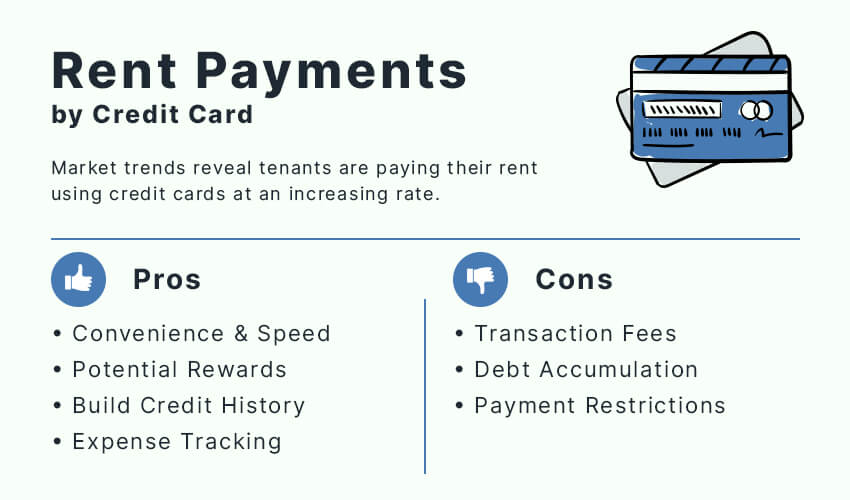
Paying rent with a credit card is an appealing option for many tenants, especially as credit cards become standard for everyday expenses. This trend is gaining momentum among tenants who value convenience, potential rewards, and the option of a temporary financial buffer for monthly obligations.

Many landlords are flexible with the payment methods they accept for rent, recognizing that accommodating tenant preferences can foster higher satisfaction with their tenants and reduce turnover.

For many renters, the prospect of earning airline miles or cash-back points on what is typically their largest monthly expense is compelling. Others appreciate the assurance that a delayed paycheck will not automatically result in missed payments. At the same time, concerns arise regarding additional fees, the risk of accumulating debt, and whether approaching rent as a credit card purchase is advisable in the long run.

Rent payments made via credit card have become increasingly common, reflecting broader shifts in consumer habits. While many property managers once found credit card usage to be a niche preference, recent data shows steady growth in adoption rates across various rental markets. This indicates a gradual move away from traditional payment methods, like paper checks and money orders, toward more streamlined, digital solutions.

Several factors contribute to this upward trajectory. First, online payment portals have simplified the transaction process, allowing tenants to manage rent from their smartphones or computers. Second, many renters view credit cards as a convenient financial tool, especially for large, recurring bills. Finally, ongoing changes in consumer behavior, such as favoring speed and ease of use, reinforce the popularity of credit cards for monthly rent.

Demographics

Demographics also play a critical role in shaping payment preferences. Younger renters, particularly those who grew up in the digital age, are often drawn to the convenience of credit cards and online transactions.

They may also appreciate the added benefits, such as earning rewards or building credit history. Meanwhile, older renters, who might be more accustomed to checks or bank transfers, are increasingly adopting digital solutions, although they may still weigh factors like processing fees and security concerns before making the switch.

Reasons for Choosing Credit Card Payments Over Other Methods

  1. Convenience and Speed
    Credit card rent payments eliminate the need for paper checks, postage, or in-person drop-offs. Many platforms support autopay, ensuring tenants never miss a due date.
  2. Potential Rewards
    Cash back, travel miles, or loyalty points can be compelling incentives for tenants who already rely on credit cards for everyday spending. These perks effectively reduce the cost of rent, especially if balances are paid off monthly.
  3. Financial Flexibility
    Using a credit card can provide a short-term cushion for tenants facing income variability. If timed properly, it can help bridge the gap until their next paycheck.
  4. Digital Record-Keeping
    Credit card statements provide a clear, consolidated record of rent payments, which can be beneficial for personal budgeting and end-of-year tax documentation (if applicable).

Should Tenants Pay Rent with a Credit Card?

Evaluating Personal Financial Situations

  • Understand Your Monthly Budget
    • If you track expenses and pay off your statement balance before interest accrues, credit-based rent payments can be advantageous.
    • If you struggle to clear your balance each month, adding rent could exacerbate financial strain.
  • Assess Income Stability
    • Individuals with irregular paychecks might value the flexibility of a credit card, as it can bridge temporary cash flow gaps.
    • For those with consistent pay, be cautious of interest charges if you do not pay off the full statement balance.
  • Consider Credit Score Implications
    • Paying rent with a credit card can contribute positively to your credit history if payments are made on time.
    • High balances increase your credit utilization ratio, potentially harming your score if not managed carefully.
  • Long-Term Goals
    • Using a credit card strategically could align with goals like building credit or earning rewards.
    • On the other hand, unforeseen expenses can lead to rising interest costs if rent charges carry over multiple billing cycles.

Weighing the Convenience vs. Potential Costs

  • Convenience Factors
    • Automated payments can eliminate missed due dates and the need for paper checks or in-person drop-offs.
    • Some cards offer rewarding benefits such as cash back or travel miles, which may partially offset rent expenses.
  • Transaction Fees
    • Many payment portals pass processing fees to tenants, reducing the net benefit of any rewards earned.
    • Compare these fees against the value of potential perks or the cost of alternative payment methods.
  • Risk of High-Interest Debt
    • Carrying a large rent balance can accumulate significant interest charges, especially if other expenses also land on the card.
    • If you anticipate difficulty paying off your monthly statements, consider a less costly payment method.
  • Striking a Balance
    • Weigh the pros (convenience and possible rewards) against the cons (fees and interest charges) in the context of your personal finances.
    • Ultimately, whether credit card rent payments are right for you depends on your ability to manage the associated costs responsibly.

Pros of Paying Rent with a Credit Card

Potential for Credit Card Rewards

Choosing to pay rent with a credit card can open the door to attractive reward programs. Some cards offer cash back, others grant travel points or airline miles, and a select few even provide exclusive perks like lounge access or concierge services. By funneling a major expense, like paying monthly rent through a rewards card, tenants may effectively lower their overall cost of living, provided they pay off the balance in full. However, it’s crucial to verify that the potential rewards outweigh any processing fees.

Building Credit History

For renters who consistently make on-time payments, using a credit card can strengthen their credit profile over the long run. Timely rent transactions add another layer of positive payment history, illustrating financial responsibility to lenders and credit bureaus. As credit scores improve, individuals may qualify for favorable loan terms, better interest rates on mortgages, or even premium credit cards with more generous perks. The key lies in maintaining disciplined spending habits and ensuring each monthly statement is managed responsibly.

Easier Tracking of Expenses

Paying rent through a credit card creates a clear paper trail, simplifying budgets and financial record keeping. Credit card statements can be accessed online at any time, often organized by category. This can be extremely useful for tenants who are trying to keep a closer watch on where their money goes each month, especially when juggling multiple financial obligations. Having all expenses in one place can help simplify a tenant’s tax preparation, particularly if any portion of the rent is deducted for work-from-home or business-related use.

Cons of Paying Rent with a Credit Card

Transaction or Processing Fees

Paying rent with a credit card often comes with additional transaction or processing fees. These charges can be a percentage of the total rent, sometimes ranging from 2% to 3% or more, which quickly adds up when monthly rent runs into the thousands. Even the most appealing cash back or airline mile programs may not fully offset these extra costs, especially if your rent is already a significant portion of your budget.

For tenants who are focused on maximizing rewards, the key question becomes whether the perks gained are worth the fees incurred. In certain scenarios, card benefits, like a generous signup bonus, might justify the added expense. However, if the monthly processing fee outstrips potential rewards, you may find yourself paying more than you had anticipated.

Risk of Accumulating Debt and Interest

One of the most pressing concerns with credit card rent payments is the risk of falling into debt. Because rent is typically a tenant’s largest expense each month, placing it on a credit card can lead to high balances that become difficult to pay off. Carrying forward these balances incurs interest but can also inflate your credit utilization ratio, potentially harming your credit score over time.

Even disciplined spenders can encounter unexpected financial hurdles such as medical bills, car repairs, or job changes that make it challenging to clear a large credit card balance before interest accrues. Once revolving debt kicks in, the original convenience of credit-based rent payments may feel overshadowed by interest charges. Having a realistic plan to pay the balance in full is crucial for keeping these risks under control.

Landlord/Property Management Restrictions

Although credit card payments are becoming more common, not all landlords or property management services companies welcome this option. Some businesses choose to avoid the administrative headaches or fees associated with processing credit card transactions. Others may allow it but impose strict policies or surcharges to cover additional costs they incur.

This inconsistency can create confusion for tenants who prefer a uniform payment experience. Before signing a lease or committing to credit card payments, it’s important to clarify whether they’re accepted and understand any limitations or extra fees involved.

Will You Earn Points for Paying Rent with a Credit Card?

Reward Programs and Eligibility

One of the most alluring aspects of paying rent with a credit card is the prospect of earning points or cash back on an otherwise routine expense.

Whether you’re aiming to rack up airline miles, hotel rewards, or a simple cashback bonus, these programs can appear to offer an attractive incentive. However, not all reward programs view rent payments equally. Some issuers will credit points for a rent transaction just like any other purchase, while others may exclude rent altogether or classify it in a non-reward category.

  • Check Your Card Terms
    • Before adding your landlord or property management company as a payee, review your card’s rewards structure. You’ll want to confirm whether rent qualifies as an eligible purchase, and if so, at what rate (e.g., 1 point per dollar, 2 points, etc.).
  • Third-Party Platforms
    • Certain platforms designed for rent payments specifically partner with credit card issuers to ensure smooth processing. These services might have unique agreements or promotional offers that let you earn points more seamlessly.
  • Promotional Bonuses
    • From time to time, credit card companies may run promotions that offer elevated rewards on specific categories. While rent seldom appears as a standalone category, you never know when a limited-time bonus might pop up.

Bonus Category Considerations

Not all spending categories are created equal in the eyes of credit card issuers, and that rings especially true for rent payments. Most credit cards have clearly defined bonus categories such as dining, grocery, gas, and travel. Rent, however, generally falls under a broad category of “miscellaneous” or “personal services,” which rarely earns bonus rates.

Other Factors to Consider

Credit Utilization

Credit utilization, the percentage of your available credit that you’re currently using, plays an essential role in determining your credit score. When you charge a large recurring expense like rent to a credit card, it can quickly drive up your utilization ratio, especially if you keep your credit limit relatively low or you’re juggling multiple bills on the same card.

  • Short-Term vs. Long-Term Effects
    • A one-time spike in utilization might be manageable if you pay it down immediately, but consistently high balances can erode your credit health over time.
  • Credit Limit Adjustments
    • Some card issuers allow periodic limit increases; requesting one may help keep your utilization ratio in check, even if you regularly pay rent on your card.
  • Monitoring is Key
    • Regularly tracking your balance ensures you’re aware of how close you are to your limit and whether it’s time to explore alternative payment methods to avoid a ding in your score.

Payment Platforms and Security

As credit card rent payments gain popularity, countless online platforms have emerged to facilitate the process. While these digital solutions can offer valuable convenience, it’s important to understand their security measures and fee structures:

  • Encryption and Data Protection
    • Look for platforms that use robust encryption methods (like SSL or TLS) to safeguard your personal and financial information. Reputable providers often display security certifications, which can be a helpful indicator of their commitment to data protection.
  • Fraud Prevention
    • A reliable payment platform should have additional layers of fraud detection and identity verification. Multi-factor authentication, transaction monitoring, and proactive alerts can all help protect your account from unauthorized activity.
  • Platform Fees
    • Some platforms will absorb part of the transaction fee or split it with the tenant, while others may pass on the full cost. Understanding how fees are assessed and whether your landlord passes them directly to you can influence whether paying rent by credit card remains cost effective.

Alternatives to Credit Card Payments

Before you commit to monthly credit card rent payments, it’s worth examining other methods that might align better with your financial goals and monthly budget:

  1. ACH or Direct Debit
    • Automatic bank transfers often come with minimal or no fees, making them a solid choice for those who want a “set it and forget it” approach without the added cost of credit card processing.
  2. Checks
    • Though less convenient, paper checks remain a traditional fallback. They can be especially useful if your landlord or management company charges high credit card fees or if you’re striving to keep your utilization ratio low.
  3. Money Orders or Cashier’s Checks
    • For tenants who may not have checking accounts or prefer guaranteed funds, these options provide a secure means of payment. However, they do require additional effort to purchase and present in person or via mail.
  4. Rent Payment Apps (Non-Credit Card)
    • Several mobile apps allow direct transfers from your bank account at minimal cost. While they may not offer rewards, they can save you money on transaction fees and still deliver digital convenience.


Paying rent with a credit card is an option that resonates differently with each tenant. Some may find it invaluable for managing fluctuating income or building their credit history; others may regard it as an unnecessary expense once fees and potential interest charges come into play.

In the end, whether you decide to pay rent with a credit card depends on a careful balance of convenience, cost, and long-term financial strategy. By staying informed and evaluating your personal situation, you can determine the payment method that best serves your goals, both now and in the future.

Rental Scams: A Crisis Demanding Tech-Driven Solutions

For prospective tenants, the current hyper-competitive rental market can make finding a place to call home feel near impossible. With low vacancy rates and skyrocketing rents, the pressure is on to secure a place fast. These conditions evoke desperation, cloud judgments, and make even the most cautious renters more open to taking risks. When emotions run high, logic often takes a backseat.

Scammers know this all too well. They prey on the emotional rollercoaster of the housing search. A recent Dwellsy survey found that 60 percent of renters have encountered fraudulent or suspicious activity online, with 44 percent experiencing or knowing someone who’s lost money to rental scams. The losses are significant. 85 percent of victims lost over $400, and 19 percent lost upwards of $5,000. The total potential losses are estimated at a staggering $16.1 billion annually.

As the founder and CEO of Ziprent, I’ve witnessed the financial and emotional toll these scams inflict on unsuspecting renters. My team and I have had to console heartbroken renters who thought they’d found their perfect home, only to discover it was a cruel fabrication. We’ve seen the stress and financial ruin scammers cause, and it’s simply unacceptable, not to mention preventable.

While unsuspecting renters lose their hard-earned savings to fake listings and unscrupulous “landlords” and, in extreme cases, face homelessness, online marketplaces and social media platforms continue to profit. The problem is exacerbated by major listing platforms’ lack of accountability, Craigslist and Facebook Marketplace being the worst offenders. Due to their sheer size and lax verification processes, they’ve become hotbeds for fraudulent activity.

Anyone can post a listing, real or fake, with little to no oversight. It leaves renters vulnerable to increasingly sophisticated schemes involving stolen photos, misleading descriptions, and demands for upfront “rental payments” and “safety deposits.”

Yes, there are efforts made to remove fake listings. However, the sheer volume of posts and lack of identity verification make it difficult to curb the problem effectively. By the time a fraudulent listing is identified and removed, countless unsuspecting users may have already fallen victim, losing money and facing the stress of finding legitimate housing during a period of significant financial loss.

At Ziprent, we’re committed to fighting back. Our platform leverages cutting-edge AI technology to analyze listings for red flags, helping us identify and remove potential scams before they harm our users. We also use smart lockboxes for secure showings and monitor access to deter unauthorized entry.

Ziprent cannot combat this issue alone, though. It’s time for the entire industry to unite and make renter safety a top priority. We need stronger regulations that hold listing platforms accountable for verifying properties and removing fraudulent content. And most importantly, we need collaboration between property management companies, law enforcement, and technology providers.

However, change takes time. Until then, renters can take proactive steps to protect themselves:

  • Never send money or personal information until you’ve seen the property in person and confirmed the landlord’s identity. If you’re dealing with a property management services company, verify their legitimacy through online reviews and their official website.
  • Look for red flags like prices that seem too good to be true, vague descriptions, or grammatical errors. If the listing is on Craigslist or Facebook Marketplace, be extra cautious, as these platforms lack identity verification processes.
  • Google the property address and landlord’s name. Check for inconsistencies in the listing and look for reviews of the landlord or property management company. And use Google’s image search functions to check that the property images aren’t copies of a legitimate listing.
  • Avoid paying with cash, wire transfers, or gift cards. These methods of payment are commonly used by scammers. Instead, opt for traceable methods like checks or credit cards, and always get a receipt.
  • Don’t be afraid to walk away from a suspicious listing, even if it seems perfect. Continuing the hunt for a new home is a far better option than losing hundreds to thousands of dollars.

Ziprent is committed to leading the charge. Our track record of 150,000 incident-free showings proves we take renter safety seriously. I call on other industry leaders to join us in this fight. Together, we can make the dream of finding a safe and affordable home a reality for all.

How to Avoid Rental Scams: Stay Safe on Craigslist and Facebook

We get it—finding a rental is brutal right now. Scammers exploit the stress, preying on unsuspecting victims and counting on tight deadlines and housing desperation to cloud decision-making.

Enough is enough. It’s time to arm you with the knowledge to empower you to spot the red flags, protect yourself, and safely find a place to call home.

How do Rental Scams Work?

Rental scams prey on renters who need to act quickly. Scammers create fake listings for desirable properties with one goal: getting your money or identity before you realize the truth.

Here are the most common types of scams targeted at the rental market:

  • Phantom rentals are entirely fabricated listings showcasing dream apartments or houses that aren’t for rent or don’t exist at all—a tactic that will scale as AI image and video generators become more sophisticated.
  • Virtual rental tour scams exploit pre-recorded videos or stolen footage. Scammers create the illusion of legitimacy and convince you to move forward before seeing the place in person.
  • Ad hijacking involves copying and modifying legitimate rental ads, replacing the landlord’s contact information with their own.
  • Identity theft occurs when scammers use fabricated or legitimate rental applications to collect sensitive information such as your Social Security number, birth date, and bank details.
  • Self-guided/self-showing scams involve scammers posing as prospective renters, obtaining lockbox or electronic keypad codes, and using these to convince renters that they’re dealing with the real landlord.

Rental Fraud Red Flags

Think you can spot a fake listing? Scammers count on you to overlook the warning signs. Here’s what to look out for:

1. Prices that are Too Good to Be True

Found your dream rental at half the market rate? Before you celebrate, ask yourself why. Do your due diligence—a quick Google search on the “average rental price in (location)” will soon reveal if the asking price is too good to be true.

2. Typos, Poor Grammar, and Excessive Punctuation

Typos, grammar mistakes, and poor punctuation aren’t always signs of a scam, but they are a sign the person is either:

  1. hurriedly pushing out fresh listings to stay ahead of automated flagging systems used on platforms like Craigslist and/or
  2. someone unintentionally creating listings that are poorly written (this might be due to language barriers, indicating the listing has been created from an overseas location.)

3. MLS Watermarks

The Multiple Listing Service (MLS) is a database that realtors use to list properties and photos, and it often has watermarks for copyright protection. Without permission, scammers use photos from the MLS, watermarks and all, to make their fake rentals look more believable. They’re banking on you not knowing the MLS, and assuming those marks are a sign it’s legitimate.

If you see an MLS watermark on a rental listing that isn’t on a realtor’s site, it’s almost certainly a scam.

4. No Tenant Screening Processes

Any landlord claiming they don’t need applications or credit checks is either shockingly naive or up to no good. Tenant screening protects both parties. No process means they’re likely hiding something.

5. Requests for Personal Information or Money Before Viewings

Your Social Security number to “start the application’? Rent deposit to “hold your spot”? Don’t fall for their urgency tactics. Scammers want your cash or sensitive information before you realize it’s fake. They might even pressure you into acting fast to avoid “losing” your new home.

Sure, legitimate landlords and rental companies DO require personal information for background and credit checks, BUT only after you’ve viewed the property, spoken directly with the landlord or property manager, and formally applied.

6. Untraceable Payment Methods

Cryptocurrency, wire transfers, gift cards… Oh lordy, no! Legitimate landlords use traceable methods like bank transfers or rental-specific payment platforms. Scammers demand ways to get your money with no paper trail, using platforms like Zelle, Venmo and Cash App.

7. Unverifiable Property Rental Statuses

Does the rental even exist? Any real rental will have a footprint. Scammers list fake addresses, nonexistent units, or properties they have zero rights to. Here’s how to find the truth:

  • Most rentals operate through a management company. No website, office, or contact person is a huge red flag.
  • Counties often list property ownership online. If the “landlord’s” name isn’t on the deed, run!
  • Be wary of listings with no online presence at all. Even recent listings should have some trace.

8. Unconventional Requests

After a self-tour, have you been asked to leave the keys under the doormat? Is the “landlord” telling you some story about how the keys are lost and the only way in right now is through the front window? Legitimate landlords follow safety procedures and have access to their own properties. Any request that makes you go, “Wait, that’s weird…” should be a major red flag.

Platform-Specific Dangers

Unfortunately, rental scams on all sorts of platforms are rife. But the two most commonly used are Craigslist and Facebook Marketplace. Why? Because neither platform requires a user to verify their identity, making posting fraudulent listings risk-free for scammers.

So you won’t be a victim of the next scam on Craigslist or Facebook, here are some telltale signs to look out for.

Craigslist Rental Scams

In the image below, you can see that the image we searched for using Google Lens returned an exact match result. This is one of a few giveaways that this was a potential scam.

Example Scam Listing

Here are seven red flags we found in this listing:

  1. 🚩 The scam was posted after the original listing, indicating that this wasn’t an unintentional duplicate listing by either Craigslist or the user. You’ll notice the scam listing was posted 8 hours ago, while the legitimate listing was posted a day ago.
  2. 🚩An apartment in Napa County for $999? We don’t think so. A quick Google search reveals that the average apartment in Napa goes for between $2,500-3,000. Even at 465ft^2^, a thousand bucks is well below the average price range.
  3. 🚩The listing included no address, no Google Map link, and the property is seemingly located in the middle of nowhere.
  4. 🚩Only three photos? That isn’t a great sign, either.
  5. 🚩 The property description also contains typos, grammar mistakes, and bad punctuation.
  6. 🚩 And lastly, the worst offending giveaway on this listing is the request for a “one-month security deposit of $1,000.” That’s a huge red flag!
Example Scam Listing

And the legitimate listing, how can we tell this is the real deal?

  1. ✅ The price lands almost smack-bang in the middle of our Napa County average rental price. The listing’s title is also more descriptive than the scam listing.
  2. ✅ The address is mentioned. Nothing to hide here.
  3. ✅ There is a Google Maps link. Whenever you’re considering a rental from Craigslist, it’s always a good idea to browse the Street View images and try to match them with one of the listing’s images.
  4. ✅ There is a date for when this property is available to move into.
  5. ✅ Lots of property photos are always a good sign.
  6. ✅ The description is well-written and free of mistakes.
  7. ✅ Lastly, there are detailed specifics surrounding utility bills, garbage collection, and even additional rent to be paid for roommates.
Example legitimate listing

Facebook Marketplace Rental Scams

It didn’t take long to find a second example of a rental scam, this time on Facebook Marketplace. Another Google Lens search turned up several exact-match images.

Example Marketplace Scam Listing

Here are the red flags spotted on this Facebook listing:

  1. 🚩 The price is tantalizing good. Too good. The average rental price is $2,300 in Woodland, CA. $918 is far below that.
  2. 🚩 The listing was posted 4 hours ago. You’ll notice the legitimate listing was created 67 days ago.
  3. 🚩 Trulia and other listing sites mention the unit has two bedrooms and one to two bathrooms.
  4. 🚩 The description is super short.

Below the fold is mentioned the user’s profile. Naturally, we took a look. The profile is plagued with random TikTok videos, AI images are used, and the user has only a handful of friends. Worse, they had posted a second property on Marketplace, which was also a fraudulent listing copied from a legitimate listing.

Example legitimate listing

And to the legitimate listing:

  1. ✅ Price is in the right range.
  2. ✅ The number of beds and baths matches the photos.
  3. ✅ The landlord’s number is listed (we blurred it, of course).
  4. ✅ The description is comprehensive and well-written.
  5. ✅ 67 days ago. That’s when the property was listed.
  6. ✅ We cut it short so the image wouldn’t take up your entire screen, but you can see a sample of the level of detail that’s included in this listing (there’s more further down).
Example Legitimate Listing

Ziprent’s Safeguards

The last thing we want is for you to be the next victim of the scammer tactics we’ve described above. For this reason, Ziprent has dedicated systems to protect both renters and landlords. Here’s how we go above and beyond to ensure your safety:

  1. Only prospective tenants whose information is verified through multiple sources with identity verification get unique access codes for specific time slots, preventing unauthorized showings many scammers rely on.
  2. If keys go missing or other irregularities occur, we act immediately. Our response includes on-site inspections, rekeying, and collaboration with law enforcement.
  3. We collect data at every step, allowing us to quickly spot unusual activity, even if it mimics legitimate renter behavior.
  4. Our platform analyzes listings, renter behavior, and external data to flag suspicious activity in real-time. With this process in place, we catch scams that renters might miss.
  5. We act fast when things go wrong. Our dedicated team is committed to restoring access to legitimate renters and minimizing the impact on those targeted by scams.
  6. We believe knowledge is power. This guide is an example of the lengths Ziprent goes to to combat scams.

Our track record of over 150,000 incident-free self-guided tours proves our commitment to your safety while still offering the convenience you need.

Conclusion

We fight hard to protect you, but with rental scams such as the ones we’ve detailed above, it’s important that you remain alert to the signs of a fraudulent listing. Prevention is key, so remember that using verified platforms like Ziprent and other property management services like Zillow drastically reduces your risk.

And keep in mind, always be suspicious of Ziprent listings found on sites like Craigslist and Facebook. Ziprent does not, and will not in the future, ever publish our listings on Craigslist or Facebook Marketplace.

We actively discourage landlords from advertising on platforms that lack a verification process, so there’s a high likelihood they’re scams. By staying informed, reporting scams, and choosing platforms committed to renter protection, together, we can make the housing search safer for everyone.

How To Get Approved For An Apartment

Finding a rental unit can be stressful. In a tight rental market, it can be increasingly discouraging when you keep getting turned down for rental units you’re more than qualified for. When demand is high and supply is low, you’ll need to do everything you can in order to set yourself apart from others who are competing for the same rentals as you. Here are some tips for getting approved for an apartment: 

Include a cover letter

A cover letter may seem to be a little over the top, but it’s that little extra effort that could set you apart in a competitive rental market. In many parts of the country, especially urban and metropolitan centers, landlords are seeing dozens of applications come in for every rental unit. It’s likely that many of those applicants will be equally if not more qualified than you are, so you’ll want to find a way to stand out. 

Include in your cover letter the reason why you want to move into the rental unit. Talk about the kind of tenant you will be. Go over your rental history as briefly as possible. Be sure to include information about your current employment situation and notify the landlord that you have references if it is necessary. This doesn’t need to be long. It only needs to be a few paragraphs but it can make a difference in a competitive market. 

Package all required documents

When it comes to finding a place to rent, timing can be one of the most important factors. If 15 qualified people apply for one unit, the landlord has no reason to wait for you to submit all of your documents before renting it out. Getting all your documents in at the same time can be the difference between getting an apartment or being passed over. 

It’s not just getting the documents in on time that matters, You should go over each document a few times to make sure there are zero errors. Just one or two errors on the paperwork mean a landlord could potentially pass you over and go with another qualified tenant with complete paperwork. Consider using Autopilot to organize and submit all of your required documents quickly and accurately.

Check credit score

Before applying for an apartment, you should run a credit check on yourself. You can do this through your bank or a number of websites that provide credit checks from all three of the major credit history organizations. If your credit history is a little low, this could put you at a disadvantage so you may want to hold off on applying until your credit score improves. Each credit check for an apartment can damage your credit history even more so you’ll want to make sure you can get approved first. 

Improve credit score

How To Get Approved For An Apartment

It can never hurt to have a high credit score. If you feel it is a little lower than you like, you can make an extra effort to increase your score. There are a number of ways to keep track of all your bills and make sure you have autopayment for those that can damage your credit score. You’ll also want to keep track of your checking account to make sure you don’t overdraft. With a little extra effort, you can improve your score enough to give you a leg up on the competition. 

Use  references

Asking for references can be a pain. Nobody wants to answer their phone and talk to strangers about you. It almost seems pointless because it’s obvious people only give their good references, but at the same time, really bad tenants may not have very many references who will vouch for them. Just having the references alone means you’ve built up enough goodwill with prior landlords, colleagues, and friends that some are willing to vouch for you. 

Pro-tip: In an extremely tight rental market, you may need to forgo touring a rental unit prior to moving in. You can get a leg up by applying immediately when a listing goes up. The risk is you may not like the home, but sometimes it is the only option available.

How is Rental Income Taxed?

Ah, rental income—that sweet cash flow that makes being a landlord all worth it.

Unfortunately, though, Uncle Sammy’s gonna want a cut.

You see, rental income is subject to federal and state income tax rates—such a bummer.

The good news? With the right know-how, you can maximize your rental property profits and keep your tax liability to a minimum.

Allow us to show you how.

What is Rental Income?

Rental income is any payment you receive for the use or occupation of your property. It includes the usual suspects, like:

  • Rent payments are regular payments from your tenants, whether monthly, weekly, or even daily.
  • Advance rent is any rent paid before the period it covers and is also considered rental income.

The unexpected extras:

  • Security deposits that are non-refundable (like if they were used for last month’s rent or cleaning fees) are considered rental income.
  • Lease cancellation payments. If a tenant breaks their lease early and pays you a fee, that’s rental income, too.

Oh, and don’t forget these:

  • Property or service payments. If a tenant pays for repairs or gives you property instead of cash for rent, the fair market value of that service or property counts as rental income.
  • Expenses paid by tenants on your behalf (like utilities or property taxes), those amounts are considered rental income.
  • Bartered goods and services paid as rent also count as rental income.
  • Additional charges like late fees, pet fees, and parking fees are all taxable rental income.

Is Rental Income Taxable?

Yes, like ordinary income, the IRS considers rental income to be taxable income. This means it’s subject to federal income tax, and depending on where your property is located, you might also need to comply with state or even local tax laws when reporting your income.

Here’s the silver lining: there are some exceptions to this rule.

For example, if you rent out your vacation home for a few weeks out of the year, but it’s primarily for your own personal use, you might not have to pay taxes on that rental income. However, depending on where the property is located, there are specific rules and limitations for these exceptions, so do your research.

Learn more: Helpful tax tips for landlords.

At What Rate is Rental Income Taxed?

Rental income is subject to both federal and state income taxes. The exact rate you’ll pay depends on your total income and which state your property is located in.

The federal tax system uses a progressive tax structure, which means the more you earn, the higher your tax rate. So, if your rental income (plus any other income you have) pushes you into a higher tax bracket, you’ll pay a higher percentage on that income.

We’ll show you how this looks in the next section. If you want to know the exact tax rates, click here for the federal tax brackets or click here for state tax brackets.

How to Calculate Your Rental Income

Rental income is calculated by:

  1. Determining gross rental income: The total amount of rent you collected for the tax year.
  2. Subtracting any income losses: For operating expenses like vacant units or property manager fees, deduct the amount of rent you lost.
  3. Calculating your net rental income: This is your gross rental income minus expenses.
  4. Adding any other rental income: Include any other taxable rental income, like late fees or pet fees.

So, what does this look like in reality?

Let’s say you’re a property owner who owns a duplex and charges $2,000 per month in rent for each unit. Your gross annual rental income would be $48,000 ($2,000 x 2 units x 12 months). But one of your units was vacant for two months, so you lost $4,000 in rent. And you paid a property manager 10% of your collected rent, so your net rental income would be:

$48,000 (gross income) – $4,000 (vacancy) – $4,400 (management fees) = $39,600

Now, let’s say you earn $75,000 from your day-to-day. $75,000 + $39,600 is a total taxable income of $114,600, and for the sake of argument, you live in New Jersey.

Here’s how your federal and state tax liability would look if this were the case:

According to the federal tax brackets:

  • The first $11,000 is taxed at 10% = $1,100
  • The portion from $11,001 to $44,725 is taxed at 12% = $4,047
  • The portion from $44,726 to $95,375 is taxed at 22% = $11,163.78
  • The portion from $95,376 to $114,600 is taxed at 24% = $3,593.22

Total federal tax = $1,100 + $4,047 + $11,163.78 + $3,593.22 = $20,904

New Jersey uses a progressive income tax system. Based on a total taxable income of $114,600:

  • 1.4% on the first $20,000 = $280
  • 1.75% on the portion from $20,001 to $35,000 = $262.50
  • 3.5% on the portion from $35,001 to $40,000 = $175
  • 5.525% on the portion from $40,001 to $75,000 = $1,943.75
  • 6.37% on the portion from $75,001 to $114,600 = $2,512.52

Total State Tax = $280 + $262.50 + $175 + $1,943.75 + $2,512.52 = $5,173.77

This scenario would give you a combined tax liability of:

  • Federal Taxes: $20,904
  • State Taxes (New Jersey): $5,173.77
  • Total Tax Liability: $20,904 + $5,173.77 = $26,077.77

Learn more: rental property tax guide.

What Expenses Can Be Deducted From Rental Income?

Here are some of the most common rental property tax deductions:

  • Mortgage interest: That chunk of your mortgage payment that goes towards interest? Deductible!
  • Property taxes: Those pesky property taxes? Yep, you can deduct those too.
  • Repairs and maintenance costs: Did you fix a leaky faucet or replace a broken window? Those repair costs are deductible.
  • Insurance: Your landlord insurance premiums? Deductible!
  • Utilities: If you pay for any utilities on the property, like water or trash, those are deductible as well.
  • And there’s more: You can also deduct things like professional fees, travel expenses related to your rental property, and even record-keeping.

Learn more: Is rental property tax deductible?

How to Deduct Depreciation

The IRS allows you to deduct a portion of your property’s value each year to account for this wear and tear. To do this, the IRS uses a system called the Modified Accelerated Cost Recovery System (MACRS).

Here’s a simplified example:

Let’s say your rental property is worth $300,000 (excluding the land value). The IRS might allow you to depreciate it over 27.5 years. So, each year, you could deduct about $10,909 ($300,000 / 27.5) from your rental income. This is treated as a deductible rental expense and lowers your taxable income. Nice!

For more information on MACRS, head over to Publication 946 on the IRS’s website.

How to Calculate the Qualified Business Income Deduction

Another tax benefit that might apply to you? The Qualified Business Income Deduction (QBI). It allows eligible taxpayers to deduct up to 20% of their qualified business income from taxable income (and yes, your rental property could count as a business).

However, there are a few hoops to jump through to qualify for this deduction:

  • Rental activities must be conducted regularly and continuously, indicating you’re doing more than just accumulating investment properties. Factors include the type of property, number of properties rented, owner’s involvement, services provided, and lease terms.
  • The IRS offers a safe harbor under Revenue Procedure 2019-38, allowing certain rental real estate enterprises to be treated as a trade or business for QBI purposes.
  • Your taxable income needs to be below a certain threshold. (For 2024, that’s $191,950 for single filers and $383,900 for married couples filing jointly.)

How do you calculate it?

  • Step 1: Calculate your QBI (rental income minus deductions).
  • Step 2: Multiply your QBI by 20% (QBI × 0.20).
  • Step 3: Compare that amount to 20% of your taxable income.
  • Step 4: The smaller of those two numbers is your QBI deduction.

Learn more: Investment property tax deductions for landlords.

How to Report Your Rental Income On a Tax Return

When it comes to rental income, the star of the show is Schedule E. Here’s a quick rundown of how to fill out Schedule E:

  1. Property Information: Start by providing some basic info about your property, like the address and type of rental.
  2. Report income: This is where you’ll list all that lovely rental income we talked about earlier.
  3. Expenses: Now, it’s time to deduct those expenses! List all those eligible deductions, like mortgage interest, property taxes, and repairs.
  4. Calculate Your Net Income or Loss: Subtract your expenses from your income to determine your net rental property income (or loss if those expenses were higher than your income).

Once you’ve completed Schedule E, you’ll transfer that information to your main income tax return (Form 1040).

Special Tax Considerations for Real Estate Professionals

Did you know that there’s a special tax classification for real estate professionals? But before you start polishing your acceptance speech, let’s break down what it means to be a real estate professional in the eyes of the IRS:

  • Time commitment: You need to spend a significant amount of time (more than 750 hours per year) on real estate activities.
  • Active participation: You can’t just be a passive investor; you need to be actively involved in the real estate business. Think hands-on management, not just collecting rent checks.

So, what’s the big deal about being a real estate professional? It comes with some sweet real estate tax advantages:

  • Deductible losses: If your rental properties happen to lose money, you can deduct those losses against your other income.
  • No passive activity loss limitations: Normally, there are limits on how much you can deduct in passive activity losses (like those from rental properties). But if you’re a real estate professional, those limitations don’t apply.
  • 3.8% NIIT Exemption: For taxpayers above specific income thresholds, qualifying as a real estate professional may exempt your rental income from this additional tax of 3.8%, resulting in further tax savings.

Tax Treatment for Different Rental Arrangements

Did you know that the tax treatment of your rental income can vary depending on what kind of property you’re renting out? Here’s what you need to know:

  • Long-term residential rental properties: This is your classic rental scenario—leasing out a house or apartment to tenants for a year or more. The good news is that these types of rentals generally have the most favorable tax treatment, with plenty of deductions available.
  • Short-term vacation rentals: Renting out your beach condo or mountain cabin for those weekend getaways? Those are considered short-term rentals, and the tax rules can be a bit trickier. You might have to pay different taxes or face limitations on deductions.
  • Commercial properties: Renting out office space, retail stores, or industrial warehouses? The tax rules for these properties can be quite different, with different depreciation schedules and deduction limits.

Learn more: What is a rental property?

How to Minimize Rental Income Tax

Here are five tax-saving tips for landlords:

  1. Maximize those deductions: Remember all those deductible expenses we talked about earlier? Don’t miss out on a single one. Keep meticulous records and claim every deduction you’re entitled to.
  2. Depreciate like a pro: Depreciation can seriously reduce your taxable income over time. Make sure you’re taking full advantage of this valuable deduction.
  3. Consider a tax-deferred account: If you’re saving for retirement, consider stashing some of your rental income in a tax-deferred account, like a traditional IRA or 401(k). It’ll help you lower your taxable income now and enjoy tax-free growth for the future.
  4. Think about forming an LLC: Creating a Limited Liability Company (LLC) for your rental property can offer some tax advantages and liability protection.
  5. Consult with a tax professional: A tax professional (like a CPA or Enrolled Agent) will help you navigate those complex rules, maximize your deductions, and minimize your tax liability.

Take Control of Your Rental Income Tax Obligations

Between finding tenants, handling maintenance, and keeping up with shifting regulations, who has time for taxes?

That’s where property management services comes in. A good property manager (like us) will take care of those day-to-day tasks, freeing up your time and mental energy to focus on the fun stuff… yup, taxes.

The best part? Our services are totally tax deductible, so you can enjoy hassle-free property management and reduce that tax bill at the end of the financial year.

So, if you’re ready to take control of your rental property and experience the joys of stress-free ownership, jump over to our property management service page.